Friday, February 13, 2026
Why ROAS Went Up but Profit Went Down
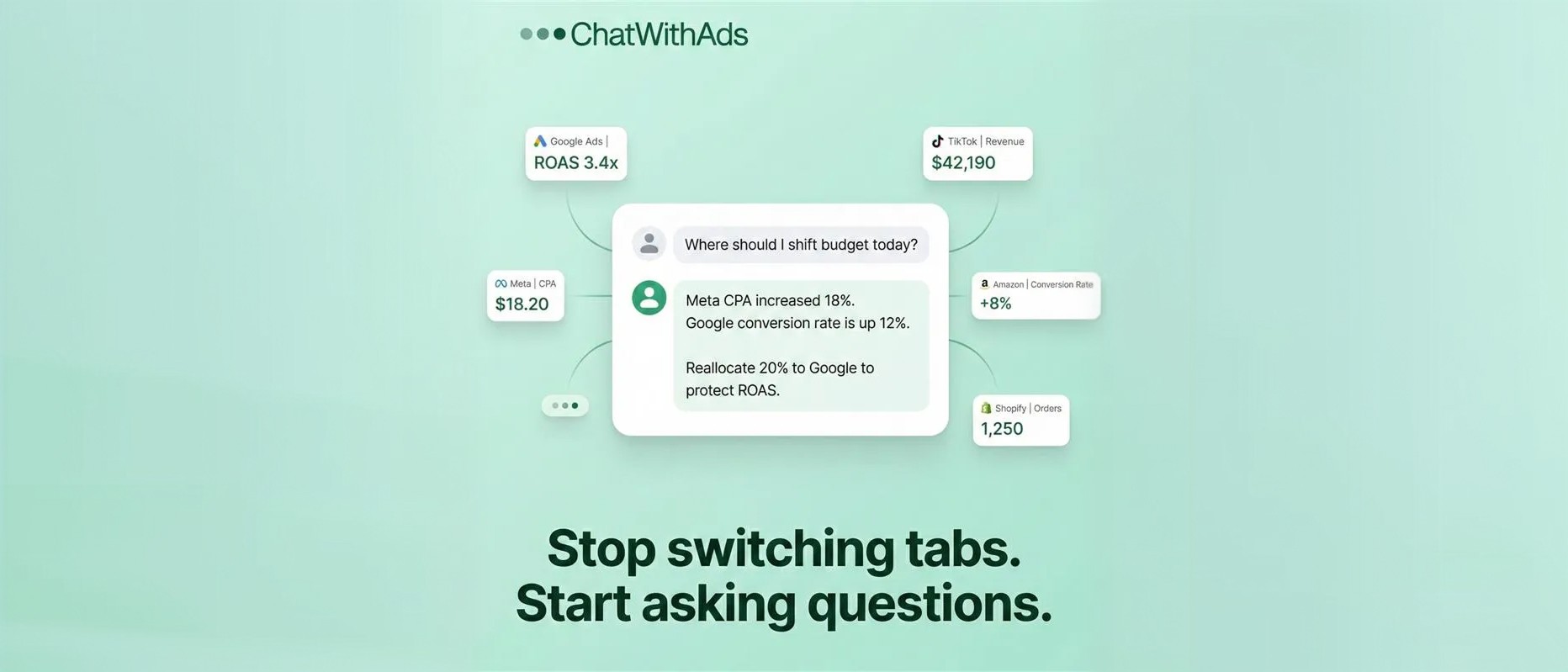
The Moment You Realize Something's Wrong
You open your dashboard.
The graph looks healthy. ROAS climbed this week. Campaign performance improved. Your media buyer sends an optimistic Slack message.
And yet, something feels off.
When you check your monthly P&L, margins are tighter. Cash feels constrained. The business feels heavier, not stronger.
That tension usually leads to one question: Why is my ROAS high but profit is low?
ROAS tells you how efficiently ads generated revenue. Profit tells you how much of that revenue you actually kept.
Those aren't the same conversation.
Why the Usual Explanations Miss the Point
When this happens, teams react fast.
"Tracking must be broken." "We need more scale." "Let's double down on the winners."
These sound logical. But they rarely solve anything because they're treating symptoms, not causes.
Here's the truth: ROAS is a narrow metric. It measures revenue divided by ad spend. That's it.
Profit is wide. It includes everything ROAS ignores:
Product cost
Shipping and fulfillment
Discounts you offered
Payment processing fees
Returns and refunds
Creative production costs
Team salaries
Software
Inventory carrying costs
You can improve marketing efficiency while quietly destroying business health.
The issue isn't performance. It's misalignment between marketing metrics and financial reality.
Most analytics dashboards won't show you this disconnect. You're looking at Google Ads in one tab, Shopify in another, your accounting software somewhere else trying to piece together what actually changed.
That's where platforms like ChatWithAds become essential. Instead of jumping between tools, you can ask: "Why did my ROAS go up but profit went down this month?" and get an answer that connects your ad performance, product costs, and actual margins in one conversation.
What Actually Changed (The Logic Behind the Numbers)
If ROAS improved and profit fell, something in the profit equation shifted.
Profit = Revenue − Variable Costs − Acquisition Costs − Operational Strain
Let's look at what commonly moves.
1. Your Product Mix Shifted
You may have scaled a product that converts easily but carries lower margin.
ROAS improves because revenue per ad dollar looks better. But if contribution margin shrinks, profit per order declines.
Revenue doesn't equal profit quality. This is where understanding contribution margin in ecommerce becomes critical.
2. Discounts Killed Your Margins
Aggressive promotions boost performance temporarily.
Lower prices increase conversion rate. Revenue grows relative to spend. ROAS climbs.
But if your gross margin was already tight, that discount slices directly into profit. You're selling more but keeping less.
This is why focusing purely on how to increase ROAS without protecting margin can quietly damage the business.
3. Your True Acquisition Cost Is Higher Than You Think
Many founders calculate CAC as ad spend divided by customers.
But that ignores creative production, agency fees, analytics tools, and payment costs.
A proper customer acquisition cost calculation includes all acquisition-related expenses. When you factor in true CAC in ecommerce, your profitability picture changes dramatically.
4. Lifetime Value Is Weak
ROAS looks at immediate revenue. But what about retention?
This is where lifetime value vs ROAS becomes important.
You may be acquiring customers who convert easily once but never return. If repeat purchase rate drops, your reliance on paid acquisition increases. Profitability erodes over time.
5. Scaling Changed the Math
At lower budgets, everything feels efficient.
When you focus on scaling paid ads profitably, new variables appear: CPM increases, audience quality drops, return rates rise, support volume expands, and operational strain grows.
Your metrics might remain stable while costs accelerate underneath.
6. Blended Performance Is Misleading You
Platform-level ROAS may look strong. But what's happening across the entire system?
This is where the marketing efficiency ratio becomes powerful. MER = Total revenue ÷ Total marketing spend
Understanding blended ROAS vs MER helps you see whether the business engine is actually improving or simply shifting credit between channels.
7. Your Profit Margins Compressed
Rising shipping rates, packaging upgrades, higher fulfillment costs, or supplier price increases can quietly compress margins.
When you analyze ecommerce profit margins, you often discover the leak is operational, not marketing.
Your Real Decision Options
Once you identify what shifted, you have choices. Each choice comes with trade-offs.
Option 1: Protect Margin First
Reduce discount depth
Prioritize higher-margin SKUs
Tighten shipping incentives
Trade-off: Conversion rate may soften. Revenue growth may slow.
Benefit: Cash flow stabilizes. You stop bleeding money on every sale.
If your goal is to increase profit without increasing revenue, this is often the smartest path.
Option 2: Fix Unit Economics While Maintaining Volume
Improve packaging efficiency
Negotiate fulfillment contracts
Improve product pages to reduce returns
Slightly adjust pricing
Trade-off: Requires operational work and focus.
Benefit: Sustainable growth without sacrificing demand.
This is how you truly improve marketing profitability without shrinking your business.
Option 3: Reallocate Spend Strategically
Shift budget from low-margin products to higher-margin offers.
Reduce reliance on cold traffic and invest in retention.
If your repeat purchase behavior is strong, your path may include optimizing to reduce customer acquisition cost through better retention flows rather than just cheaper clicks.
Trade-off: Short-term ROAS fluctuations.
Benefit: Long-term resilience and healthier economics.
Option 4: Change the Optimization Metric Entirely
Stop optimizing solely for ROAS.
Start evaluating paid ads profitability strategy based on contribution margin and lifetime value.
When you anchor decisions in profit, not platform metrics that everything changes.
This is where tools like ChatWithAds help you model scenarios before making changes. Instead of guessing what happens if you shift budget or cut discounts, you can ask: "What happens to my profit if I reduce discounts by 10% and shift spend to my premium line?" and see the actual impact before you commit.
What to Do Next: Your Action Plan
Here's a practical framework to fix this.
Step 1: Identify the Breakpoint
Find the exact week ROAS improved and profit declined.
Avoid looking at rolling averages. Pinpoint the moment the relationship shifted.
Step 2: Deconstruct the Equation
Compare before and after:
Product mix
Discount percentage
Shipping cost per order
Return rate
New vs returning customers
Contribution margin
One of these moved enough to overpower marketing efficiency gains.
This is where ChatWithAds shines. Instead of pulling data from five different places and building spreadsheets, you can ask: "What changed in my product mix between last month and this month?" and get a clear breakdown that connects your ad spend, product performance, and actual margins.
Step 3: Model Trade-Offs Before You Act
Before reacting, simulate outcomes:
If we cut discounts, what happens to margin?
If we shift spend to higher-margin SKUs, what happens to blended performance?
If we focus on retention instead of acquisition, how does CAC change?
This is where disciplined reasoning matters more than instinct.
With ChatWithAds, you can run these scenarios in conversation. Ask "Show me what happens if I move budget from my low-margin basics to my premium line" and see projected outcomes based on your actual data not generic benchmarks.
Step 4: Install Guardrails
Define clear rules for your team:
Don't scale SKUs below a certain contribution margin
Cap discount dependency
Review lifetime value monthly
Tie budget increases to margin thresholds
Guardrails prevent repeating the same mistake.
The Real Solution: Stop Chasing Vanity Metrics
When ROAS rises and profit falls, it means marketing improved inside a system that didn't.
The solution isn't chasing higher efficiency. The solution is aligning acquisition with economics.
The founders who win long term aren't the ones who celebrate the highest ROAS. They're the ones who understand trade-offs deeply.
They measure contribution margin. They protect profit. They scale intentionally.
Once you begin optimizing for profit instead of vanity efficiency, growth becomes sustainable.
See the Full Picture with ChatWithAds
The fundamental problem isn't that you're bad at marketing. It's that traditional analytics platforms force you to piece together disconnected data.
You're looking at ad performance in one place, product costs in another, margins in a spreadsheet somewhere else. No single tool shows you how these pieces connect.
ChatWithAds solves this by unifying your advertising performance, product economics, inventory dynamics, and profitability into one conversational interface.
Instead of asking "Did my ROAS improve?" you can ask the questions that actually matter:
"Why did my ROAS go up but profit go down?"
"Which products are killing my margins?"
"What happens if I stop discounting and focus on premium SKUs?"
"Where should I shift my budget to improve actual profit?"
ChatWithAds doesn't just show you metrics. It reasons across channels to find what actually changed. It connects your ad platform data with product-level costs, fees, shipping, and returns to explain exactly what shifted and what you should do about it.
It models scenarios so you can see the real impact of choosing efficiency vs. profitability before you make the change.
Most importantly, ChatWithAds shows you true profit metrics, not just ROAS vanity numbers. It helps you understand trade-offs between customer acquisition cost, margin, inventory risk, and growth.
Because at the end of the day, ROAS doesn't pay your bills. Profit does.
Start free at ChatWithAds.com and ask the questions your dashboard can't answer.
Ready to stop guessing? Connect your ad accounts and ask: "Why is my ROAS high but my profit low?" Get answers grounded in your actual data, not generic advice. No credit card required.